Starting fertility treatment can feel overwhelming, especially if you don’t know what to expect. One of the most common questions patients ask is, “What happens during the IVF process?” Understanding each stage can help reduce anxiety and prepare you for the journey ahead.
The IVF (In Vitro Fertilization) process involves several carefully planned steps, from your first consultation with a fertility specialist to the final pregnancy test. Every treatment plan is personalized, but most IVF cycles follow the same general timeline.
At Nordica Fertility Centre, this journey is supported by a team of more than 20 fertility professionals, including 7+ internationally trained embryologists. With over 23 years of experience delivering fertility care in Nigeria, Nordica combines advanced assisted reproductive technology with a patient-centred approach to treatment.
In this guide, we’ll walk you through the IVF process step by step, explain how long each stage typically takes, and answer common questions to help you feel informed and confident.
Step 1: Your Initial Fertility Consultation
Every IVF journey begins with a comprehensive consultation with a gynecologist.
During this appointment, your fertility specialist will review your:
- Medical history
- Menstrual history
- Previous pregnancies
- Previous fertility treatments
- Lifestyle factors
- Current medications
Both partners may be asked to attend, as fertility challenges can involve either partner or both.
The consultation is also an opportunity to discuss your concerns, ask questions, and understand the treatment options available.
At Nordica, the initial consultation with a fertility specialist can also be done virtually, making it easier for patients who may not be able to visit a clinic immediately or who are travelling from another location. Our fertility specialists are highly experienced gynecologists with over 80+ years collective experience. Nordica operates clinics in Lagos, Abuja, and Asaba, providing access to fertility care for patients across Nigeria and beyond.
Step 2: Fertility Testing and Treatment Planning
Before treatment begins, several tests help determine the most appropriate IVF protocol.
These may include:
- Blood tests to assess hormone levels
- Pelvic ultrasound scans
- Semen analysis
- Screening for infectious diseases
- Assessment of the uterus and fallopian tubes (when needed)
Based on the results, your fertility specialist creates a personalized treatment plan tailored to your reproductive health and fertility goals.
This personalised approach is important because IVF is not a one-size-fits-all treatment. The appropriate medications, monitoring schedule, fertilisation method, and embryo strategy can vary from one patient to another. Nordica’s team of dedicated fertility professionals works with patients to develop treatment plans based on their individual fertility needs and medical circumstances.
Step 3: Ovarian Stimulation
Unlike a natural menstrual cycle, where one egg typically matures, IVF aims to stimulate the ovaries to produce multiple mature eggs.
You will take fertility medications for approximately 8 to 14 days. These medications encourage the development of several follicles, increasing the chances of retrieving multiple healthy eggs.
During this stage, you’ll have regular monitoring appointments that include:
- Ultrasound scans
- Blood tests
- Medication adjustments when necessary
Careful monitoring helps ensure your ovaries respond appropriately while minimizing the risk of complications.
Patient safety is an important consideration during ovarian stimulation. Nordica is proud of its longstanding safety record, with no cases of severe ovarian hyperstimulation syndrome (OHSS) recorded at the centre in the past 10 years. Careful monitoring and appropriate treatment decisions remain important throughout the stimulation process.
Step 4: Trigger Injection
Once your follicles have reached the appropriate size, you’ll receive a trigger injection.
This medication helps complete the final maturation of the eggs and prepares them for retrieval.
Timing is critical, as egg retrieval is usually scheduled about 34 to 36 hours after the trigger injection.
Your fertility team will provide clear instructions about when and how the trigger medication should be administered, as timing plays an important role in coordinating egg maturation and retrieval.
Step 5: Egg Retrieval
Egg retrieval is a minor outpatient procedure performed under sedation to maximize comfort.
Using ultrasound guidance, your fertility specialist inserts a thin needle through the vaginal wall to collect mature eggs from the ovarian follicles.
The procedure usually takes 20 to 30 minutes, and most patients return home the same day after a short recovery period.
Some mild cramping or spotting afterward is normal.
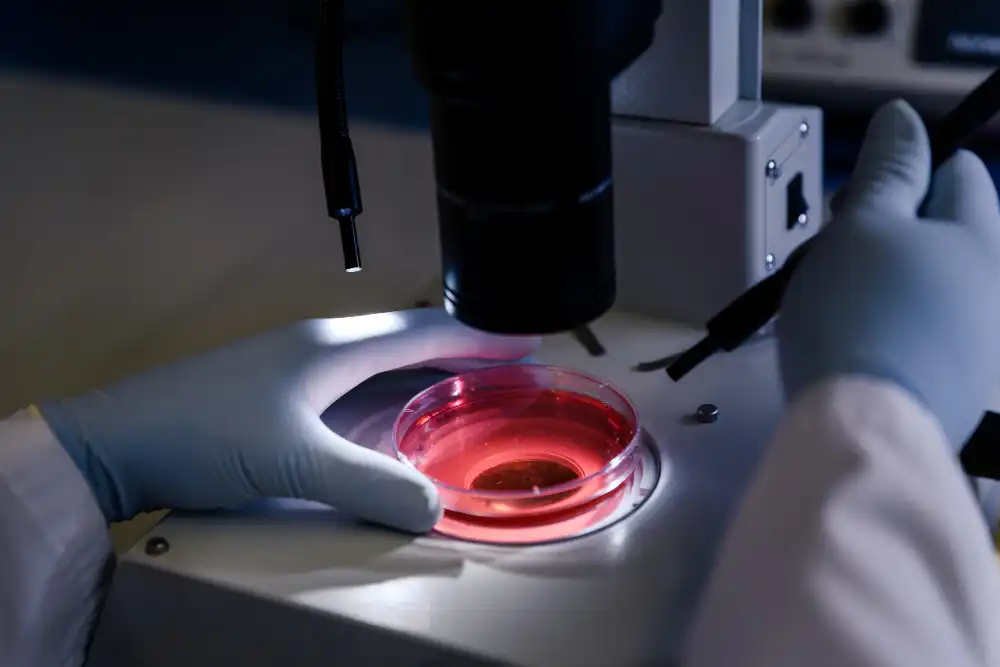
At this stage, the retrieved eggs are transferred to the embryology laboratory, where specialised laboratory expertise becomes an important part of the IVF process.
Step 6: Sperm Collection and Fertilization
On the day of egg retrieval, a sperm sample is collected from the male partner or prepared from previously frozen or donor sperm.
In the embryology laboratory, specialists select the healthiest sperm to fertilize the retrieved eggs.
Depending on your fertility diagnosis, fertilization may occur through:
- Conventional IVF, where eggs and sperm are combined in a laboratory dish
- Intracytoplasmic Sperm Injection (ICSI), where a single sperm is injected directly into an egg
The fertilized eggs are then monitored as they begin developing into embryos.
Embryology is one of the most technically important components of IVF. At Nordica, patients have access to a team of 7+ internationally trained embryologists who support the laboratory aspects of treatment. Nordica’s training partnerships with IVI Spain and Monash University, Australia, have also played an important role in strengthening its clinical and embryology expertise.
Step 7: Embryo Development
Over the next 3 to 5 days, embryologists carefully observe the developing embryos.
Each embryo is assessed for:
- Cell division
- Growth
- Appearance
- Overall quality
The goal is to identify embryos with the greatest potential for successful implantation.
In some cases, embryos may also undergo genetic testing when medically appropriate.
Healthy extra embryos may be frozen for future use.
The embryo development stage requires careful observation and laboratory expertise. Nordica’s IVF Laboratories has also been ISO 9001:2015 certified since 2015, reflecting our commitment to consistent and reliable processes across patient care and laboratory operations. Our skilled embryologists assess embryo development throughout this period and work with the fertility team to determine the most appropriate next step for each patient.
Step 8: Embryo Transfer
Embryo transfer is one of the shortest and simplest stages of the IVF process.
Using a thin catheter, the fertility specialist places a selected embryo into the uterus.
The procedure:
- Usually takes only a few minutes
- Does not require anesthesia
- Is generally painless, though some women may experience mild discomfort
Following the transfer, you’ll receive instructions on medications, activity levels, and follow-up care.
At Nordica, the goal throughout treatment is not simply to achieve a successful outcome, but to provide care with precision, safety, and attention to each patient’s individual needs.
Step 9: The Two-Week Wait
Many patients consider this the most emotionally challenging stage.
After embryo transfer, you’ll wait approximately 10 to 14 days before taking a blood pregnancy test.
During this time:
- Continue taking prescribed medications.
- Maintain your normal daily routine unless advised otherwise.
- Avoid taking home pregnancy tests too early, as they may produce inaccurate results.
It’s natural to experience excitement, anxiety, or uncertainty during this period.
Your fertility team remains an important source of guidance during this period. Following the medication and follow-up instructions provided by your clinic is important while you wait for the pregnancy test.
Step 10: Pregnancy Testing
The final step of the IVF process is a blood test to measure the pregnancy hormone (hCG).
If the result is positive:
- Additional blood tests may be scheduled.
- An early ultrasound will usually be arranged within a few weeks to confirm the pregnancy and monitor its progress.
If the result is negative:
Your fertility specialist will review the treatment cycle with you, discuss possible reasons the pregnancy did not occur, and recommend appropriate next steps. This may include another IVF cycle, using frozen embryos, or adjusting the treatment approach.
Whatever the outcome, personalised follow-up is an important part of fertility care. Your fertility specialist can help you understand the result and discuss the options available for the next stage of your journey.
How Long Does the IVF Process Take?
One complete IVF cycle generally takes 4 to 6 weeks, although the exact timeline varies depending on your treatment protocol and individual response to medication.
A typical timeline includes:
| Stage | Approximate Duration |
| Consultation and testing | 1–3 weeks |
| Ovarian stimulation | 8–14 days |
| Egg retrieval | 1 day |
| Embryo development | 3–5 days |
| Embryo transfer | 1 day |
| Pregnancy test | 10–14 days after transfer |
Your fertility specialist will provide a schedule tailored to your treatment plan.
For more than 23 years, Nordica Fertility Centre has helped individuals and couples navigate the complexities of fertility treatment in Nigeria. Since opening its first clinic in Lagos in 2003, Nordica has served more than 15,000 families and supported the birth of over 5,000 babies.
Today, Nordica’s fertility care is built around advanced assisted reproductive technology, dedicated fertility specialists and embryologists, and a strong commitment to patient safety. Its clinics in Lagos, Abuja, and Asaba provide patients with access to fertility services in multiple locations, while its international training partnerships continue to support the development of its expertise.
What to Expect from Your IVF Journey
The IVF process involves several stages, and knowing what to expect can make the experience feel more manageable. From the first consultation and fertility testing to ovarian stimulation, egg retrieval, embryo development, transfer, and pregnancy testing, each stage has an important role to play.
At Nordica, the approach goes beyond the individual procedures. With more than two decades of fertility experience, a team of 20+ fertility professionals, 7+ internationally trained embryologists, and a longstanding commitment to safety, the centre aims to provide patients with fertility care that combines expertise, precision, and compassion.
If you’re considering IVF, a consultation with a fertility specialist is the best place to begin. Nordica Fertility Centre offers fertility consultations to help patients understand their fertility status, treatment options, and the most appropriate next steps for their individual circumstances.
Frequently Asked Questions
Is the IVF process painful?
Most patients experience only mild discomfort during parts of the treatment. Egg retrieval is performed under sedation, while embryo transfer is typically painless.
How many clinic visits are required?
You’ll usually attend several monitoring appointments during ovarian stimulation, in addition to visits for egg retrieval, embryo transfer, and follow-up testing.
Can I continue working during IVF?
Many people continue working throughout treatment. However, your specialist may recommend modifying strenuous activities during certain stages of the cycle.
What happens if there are extra embryos?
Additional healthy embryos can often be cryopreserved (frozen) for future pregnancy attempts, reducing the need to repeat the entire stimulation process.
Does every IVF cycle result in pregnancy?
No. IVF improves the chances of conception for many people, but success depends on several factors, including age, embryo quality, and the underlying cause of infertility.
Conclusion
The IVF process is a carefully coordinated journey designed to give individuals and couples the best possible chance of achieving a healthy pregnancy. From the initial consultation and fertility testing to ovarian stimulation, egg retrieval, embryo transfer, and pregnancy testing, every stage plays an important role in your treatment.
While every patient’s experience is unique, understanding the IVF process can help reduce uncertainty and empower you to make informed decisions about your fertility care. With guidance from an experienced fertility team, you can navigate each step with greater confidence and clarity.
If you’re considering IVF or would like to learn whether it’s the right option for you, scheduling a consultation with a fertility specialist is the best place to begin.