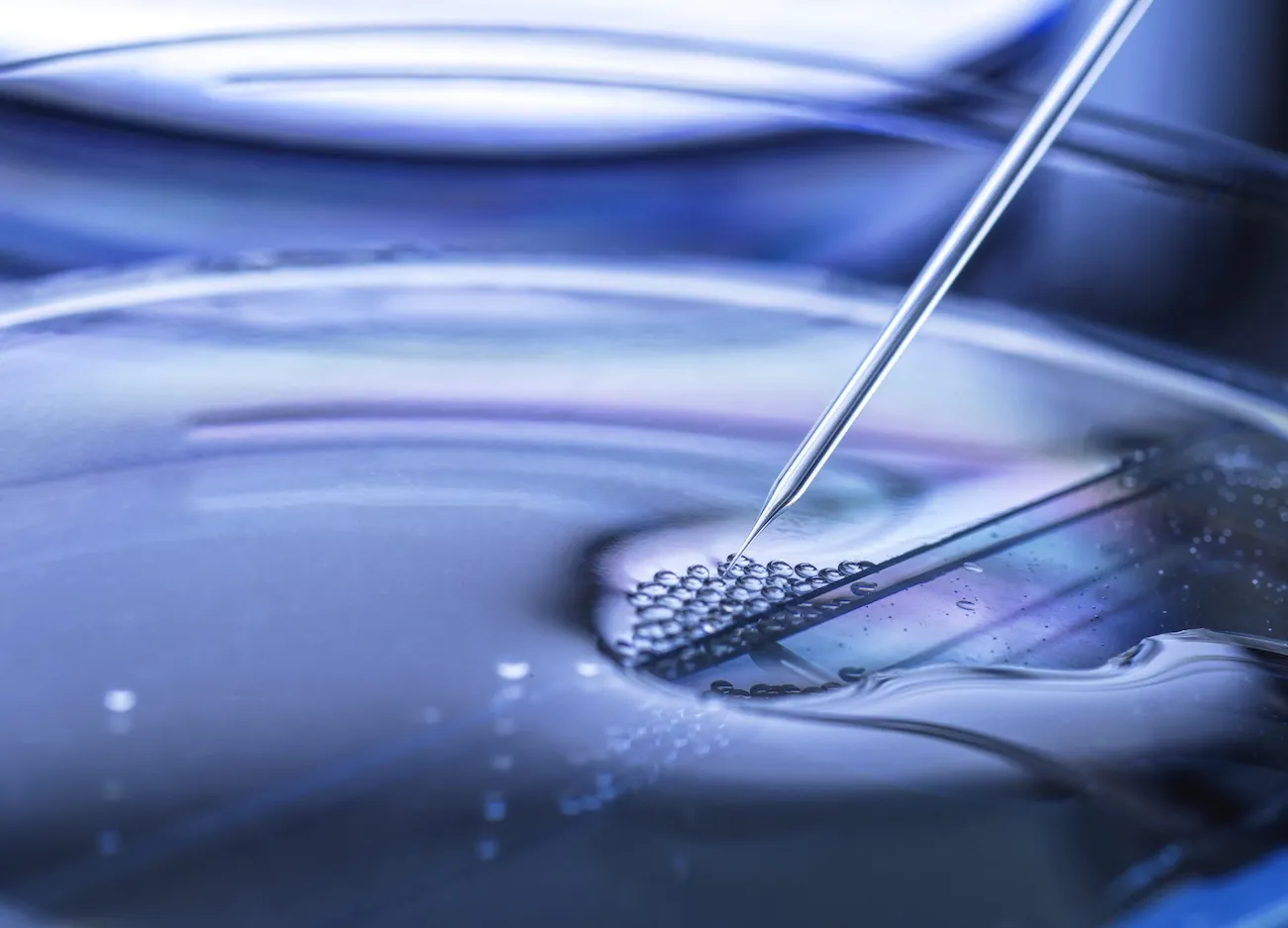
In Vitro Fertilization (IVF) is an advanced form of Assisted Reproductive Technology (ART) that helps individuals and couples conceive when natural conception has been unsuccessful or is unlikely to occur.
The term in vitro means “in glass,” referring to the fertilisation process that takes place in a highly controlled embryology laboratory rather than inside the body. During IVF, mature eggs are collected from the ovaries and fertilised with sperm in the laboratory. Once fertilisation occurs, the resulting embryos are carefully monitored as they develop before one or more healthy embryos are transferred into the uterus.
Depending on each patient’s circumstances, IVF treatment may involve:
IVF has helped millions of families worldwide and remains one of the most successful fertility treatments for many causes of infertility.
IVF is not always the first treatment recommended. Before suggesting IVF, fertility specialists perform a comprehensive assessment to identify the underlying cause of infertility and determine the most appropriate treatment plan.
IVF may be recommended for individuals or couples experiencing the following conditions.
Women who ovulate infrequently or do not ovulate at all may have difficulty conceiving naturally. Conditions such as polycystic ovary syndrome (PCOS) and hormonal imbalances can interfere with egg release. While some patients respond well to ovulation induction treatments, others may achieve better outcomes through IVF.
Healthy fallopian tubes are essential for natural fertilisation because they allow the egg and sperm to meet. When the tubes are blocked, damaged, or removed due to infection, surgery, or ectopic pregnancy, IVF bypasses the fallopian tubes entirely by fertilising the eggs in the laboratory.
Male infertility can result from:
For many of these conditions, IVF combined with Intracytoplasmic Sperm Injection (ICSI) offers significantly improved fertilisation outcomes. In some situations, additional techniques such as sperm retrieval procedures or advanced sperm selection methods may also be recommended.
Endometriosis occurs when tissue similar to the lining of the uterus grows outside the womb. This condition can affect the ovaries, fallopian tubes, and surrounding pelvic organs, making conception more difficult.
Depending on the severity of the condition and previous treatments, IVF may provide a higher chance of pregnancy than natural conception.
Sometimes fertility investigations reveal no obvious reason why pregnancy has not occurred despite regular unprotected intercourse.
After appropriate evaluation and, where necessary, other fertility treatments, IVF may be recommended to improve the chances of conception.
A woman’s fertility naturally declines with age due to changes in both the quantity and quality of her eggs. Women in their late thirties and forties may benefit from IVF because treatment allows fertility specialists to closely monitor egg development, fertilisation, and embryo quality.
If one or both partners carry an inherited genetic condition, IVF may be combined with Pre-Implantation Genetic Testing (PGT) to help identify embryos that do not carry specific genetic abnormalities before transfer, where clinically appropriate.
Patients who have not achieved pregnancy following other fertility treatments may be advised to consider IVF after a thorough review of their previous treatment history.
IVF has transformed fertility care by providing solutions for many conditions that previously made pregnancy difficult or impossible.
Some of the advantages of IVF include:
Because every fertility journey is unique, the benefits of IVF vary from one patient to another. A personalised assessment helps determine whether IVF is the most appropriate treatment option.
Understanding each stage of IVF can help patients feel more informed and confident throughout their fertility journey. Although every treatment plan is personalised, most IVF cycles follow a series of carefully coordinated steps.
Every IVF journey at Nordica Fertility Centre begins with a detailed consultation.
During this appointment, your fertility specialist will review your medical history, reproductive history, previous treatments, and lifestyle factors that may affect fertility.
A comprehensive fertility assessment may include:
The findings from these assessments help determine the most suitable treatment plan and medication protocol for your individual needs.
In a natural menstrual cycle, the ovaries usually release one mature egg each month.
During IVF treatment, specially prescribed fertility medications are used to stimulate the ovaries to produce multiple mature eggs. Producing several eggs increases the number available for fertilisation, improving the likelihood of developing healthy embryos.
Throughout this stage, your response to medication is carefully monitored through:
These assessments help fertility specialists adjust medication when necessary and determine the ideal time for egg retrieval.
Once the follicles have reached the appropriate size, a trigger injection is administered to complete the final maturation of the eggs before collection.
Egg retrieval is a minor procedure performed under conscious sedation to ensure patient comfort.
Using ultrasound guidance, a fine needle is passed through the vaginal wall to collect mature eggs directly from the ovarian follicles.
The procedure usually takes approximately 20 to 30 minutes, after which patients are monitored for a short period before returning home the same day.
At the same time, a semen sample is collected from the male partner or prepared from previously frozen sperm or donor sperm where applicable.
The sperm sample is then processed in the embryology laboratory to select the healthiest sperm for fertilisation.
Once the eggs and sperm have been prepared, fertilisation takes place in Nordica’s advanced embryology laboratory under carefully controlled conditions.
As part of our IVF protocol, Intracytoplasmic Sperm Injection (ICSI) is routinely performed. During ICSI, a highly trained embryologist injects a single healthy sperm directly into each mature egg using specialised microscopic equipment. This technique helps improve fertilisation rates, particularly in cases involving male factor infertility.
Depending on each patient’s clinical needs, additional laboratory technologies may also be recommended to optimise sperm selection, embryo development, or implantation.
Following fertilisation, the embryos are monitored closely over the next several days to assess their growth and quality before the most suitable embryo is selected for transfer.
After fertilisation, the embryos are cultured in carefully controlled laboratory incubators that replicate the conditions inside the human body. During this period, experienced embryologists monitor each embryo’s growth, cell division, and overall quality.
Embryo development is assessed daily to identify those with the highest potential for implantation. At Nordica Fertility Centre, embryos can be cultured to the blastocyst stage (Day 5 or Day 6) when clinically appropriate. Blastocyst culture allows embryos more time to demonstrate their developmental potential, helping embryologists select the most viable embryo(s) for transfer.
Depending on your individual treatment plan, your fertility specialist may recommend additional laboratory technologies to further support embryo selection and implantation.
Embryo transfer is the final procedure in an IVF cycle and is typically simple, painless, and does not require anaesthesia.
During the procedure, one or more carefully selected embryos are placed into the uterus using a thin, soft catheter under ultrasound guidance. The number of embryos transferred depends on several factors, including the patient’s age, embryo quality, medical history, and current clinical guidelines.
Following embryo transfer, progesterone medication is prescribed to support the uterine lining and encourage successful implantation. Patients can usually return home shortly after the procedure and resume most normal daily activities as advised by their fertility specialist.
Approximately two weeks after embryo transfer, a blood pregnancy test is performed to determine whether implantation has occurred.
If the test is positive, an ultrasound scan is scheduled a few weeks later to confirm:
Hormonal support may continue during the early weeks of pregnancy to help create the best possible environment for continued development.
Regardless of the outcome, the Nordica team remains available to provide medical guidance, emotional support, and recommendations for the next steps.
No two fertility journeys are exactly alike. At Nordica Fertility Centre, every IVF treatment plan is tailored to the individual after a thorough review of medical history, fertility investigations, age, reproductive goals, and any underlying health conditions.
Rather than following a standard treatment protocol, our fertility specialists develop personalised ovarian stimulation plans designed to optimise egg development while reducing unnecessary risks. Women with conditions such as polycystic ovary syndrome (PCOS), diminished ovarian reserve, endometriosis, or previous unsuccessful IVF cycles may require different medication protocols and monitoring schedules.
Throughout treatment, patients receive close monitoring through:
This personalised approach allows treatment decisions to be made based on each patient’s response rather than a fixed protocol.
Our embryology laboratory also follows strict quality standards throughout egg handling, fertilisation, embryo culture, and embryo selection to support optimal clinical outcomes.
Where appropriate, surplus high-quality embryos may be frozen using cryopreservation for future treatment cycles. Frozen embryo transfer allows many patients to pursue another pregnancy without repeating ovarian stimulation and egg retrieval, potentially reducing both physical and financial demands.
Since its establishment, Nordica Fertility Centre has become one of Nigeria’s leading destinations for expert fertility treatment and reproductive healthcare. Patients choose Nordica for its combination of advanced fertility solutions, experienced specialists, personalised care, and a strong commitment to helping individuals and couples achieve their dream of starting a family. It’s easy to see why.
Whether you’re exploring fertility treatment for the first time or seeking advanced assisted reproductive technology after previous unsuccessful attempts, we’re here to provide expert guidance and evidence-based care tailored to your individual circumstances.
Book a consultation today to discuss your fertility concerns and learn whether IVF treatment is the right option for you.
Because nothing compares to the joy of holding your own baby.
Because nothing compares to
the joy of holding your own baby.