
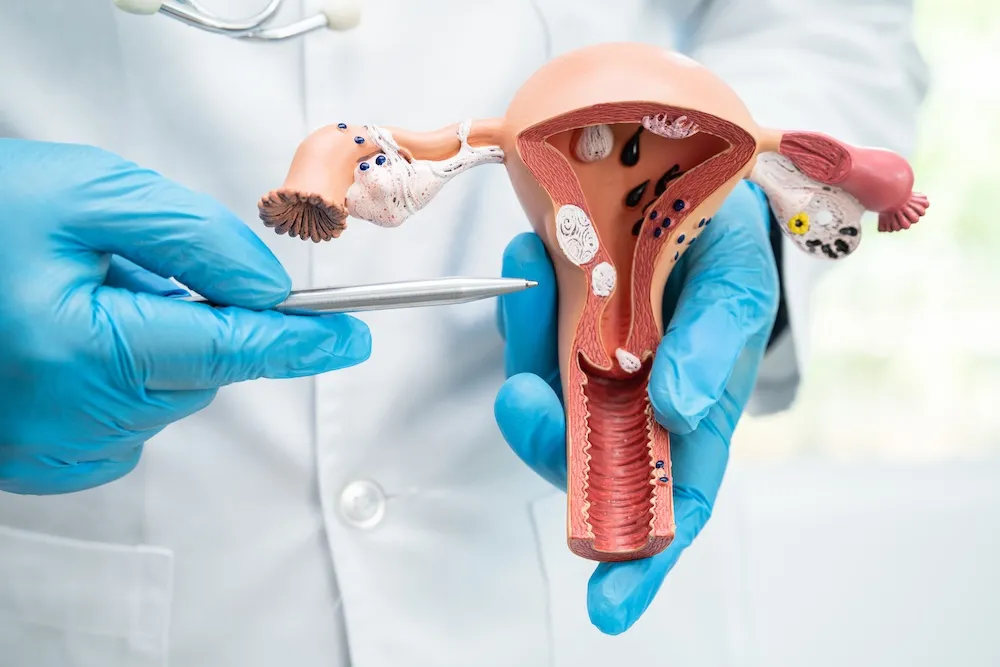
The days following an embryo transfer can be an emotional part of the IVF journey. After going through ovarian stimulation, egg retrieval, fertilization, and embryo development, it is natural to pay close attention to every change in your body and wonder whether it could be a sign that the embryo has implanted.
Some women experience symptoms such as mild cramping, light spotting, breast tenderness, fatigue, bloating, or changes in vaginal discharge after embryo transfer. However, these symptoms do not necessarily mean that implantation has occurred. Fertility medications, particularly progesterone and estrogen, can cause many of the same symptoms.
It is also completely possible to have no noticeable symptoms after embryo transfer and still have a successful pregnancy.
The only reliable way to determine whether an embryo transfer has resulted in pregnancy is through the pregnancy test scheduled by your fertility clinic.
At Nordica Fertility Centre, embryo transfer is supported by a team that includes 7+ internationally trained embryologists, bringing specialised laboratory expertise to the IVF process. This expertise is important because the journey from fertilization and embryo development to transfer requires careful laboratory handling and monitoring.
In this guide, we will discuss the possible positive signs after embryo transfer, when they may occur, what different symptoms can mean, and when you should take a pregnancy test.
What Happens After an Embryo Transfer?
Embryo transfer is the stage of IVF in which a selected embryo is placed inside the uterus using a thin catheter.
After the transfer, the embryo may continue developing and, if conditions are favourable, attach to the lining of the uterus. This process is known as implantation.
Once implantation occurs, the developing pregnancy begins producing human chorionic gonadotropin (hCG), the hormone detected by pregnancy tests.
The timing of implantation can vary depending on factors such as the stage of the embryo at transfer and individual biological differences. This is why there is usually a waiting period between embryo transfer and pregnancy testing.
9 Positive Signs After Embryo Transfer
Some symptoms may occur during the days following embryo transfer and can be associated with early pregnancy. However, none of these symptoms can confirm that implantation has occurred on their own.
1. Light Spotting
Light spotting may occur after embryo transfer and can sometimes be associated with implantation.
You may notice a small amount of pink, brown, or light-red blood when wiping or on your underwear.
However, spotting can also occur for other reasons, including cervical irritation from the transfer procedure or hormonal changes during fertility treatment.
Light spotting therefore does not automatically mean that the transfer has been successful.
If bleeding becomes heavy, persistent, or is accompanied by significant pain, contact your fertility clinic for advice.
2. Mild Cramping
Mild pelvic cramping or occasional twinges may occur following embryo transfer.
Some women describe the sensation as similar to mild menstrual cramps. It may be related to changes in the uterus, the transfer procedure, hormonal medication, or early pregnancy.
Mild cramping by itself cannot tell you whether implantation has occurred.
Severe or worsening abdominal pain, particularly when accompanied by bleeding, should be reported to your fertility care team.
3. Breast Tenderness
Breast tenderness, swelling, or sensitivity can occur during the waiting period.
Hormonal changes associated with early pregnancy can cause breast changes, but fertility medications can produce similar effects.
Progesterone supplementation, which is commonly used during IVF treatment, can cause breast tenderness even when pregnancy has not occurred.
For this reason, breast tenderness should be viewed as a possible symptom rather than proof of pregnancy.
4. Increased Fatigue
Feeling unusually tired during the days after embryo transfer may be another symptom you notice.
Early pregnancy can contribute to fatigue because of hormonal changes. However, fertility medications, progesterone, emotional stress, and the physical demands of IVF can also leave you feeling exhausted.
Getting enough rest and maintaining your normal daily routine can help you manage this period while waiting for your pregnancy test.
5. Bloating
Some women experience abdominal bloating after embryo transfer.
Bloating may occur because of hormonal changes or fertility medications and does not necessarily indicate that implantation has taken place.
It is also possible for bloating to occur as a result of the ovarian stimulation and other stages of an IVF cycle.
If you experience severe abdominal swelling, significant pain, difficulty breathing, or rapid weight gain, contact your fertility clinic promptly.
6. Changes in Vaginal Discharge
You may notice changes in the amount, colour, or consistency of vaginal discharge after embryo transfer.
An increase in discharge can occur because of hormonal changes or progesterone medication, particularly when progesterone is administered vaginally.
Some women may also notice increased discharge during early pregnancy.
However, discharge alone cannot confirm pregnancy.
Discharge accompanied by an unpleasant smell, itching, burning, unusual colour, or significant irritation may indicate an infection and should be evaluated by a healthcare professional.
7. Increased Urination
Some women notice that they need to urinate more frequently during early pregnancy.
This can occur because of hormonal and circulatory changes associated with pregnancy.
However, increased urination shortly after embryo transfer is not a reliable way to determine whether the transfer was successful. Drinking more fluids, anxiety, medications, or a urinary tract infection can also increase the need to urinate.
If frequent urination is accompanied by pain, burning, fever, blood in the urine, or significant urgency, speak with your healthcare provider.
8. Nausea or Changes in Appetite
Nausea is commonly associated with pregnancy, but it generally develops later rather than immediately after embryo transfer.
If you experience nausea during the two-week wait, it may be related to hormonal medication, stress, digestive changes, or other factors rather than pregnancy itself.
Similarly, changes in appetite or food preferences are not reliable indicators of implantation.
9. A Missed Period
A missed period can be an encouraging sign, particularly if your menstrual cycle is usually predictable.
However, your normal menstrual timing may be affected by fertility medications and the IVF treatment cycle, so a missed period should not be used on its own to determine whether the embryo transfer was successful.
Your scheduled pregnancy test remains the more reliable way to confirm pregnancy.
Can You Have No Symptoms After Embryo Transfer?
Yes.
Having no symptoms after embryo transfer does not mean that the treatment has failed.
Some women experience several symptoms during the two-week wait, while others notice virtually nothing.
This is important because it is easy to compare your experience with stories from other women undergoing IVF and become worried if you do not feel the same symptoms.
Pregnancy develops differently from person to person, and early pregnancy symptoms can be subtle or absent.
Likewise, experiencing several symptoms does not guarantee a positive pregnancy test because many symptoms can be caused by fertility medications.
The presence or absence of symptoms should therefore not be used to predict the outcome of your embryo transfer.
How Soon After Embryo Transfer Do Positive Signs Appear?
There is no specific day when everyone will begin experiencing pregnancy symptoms.
Some women may notice mild cramping or spotting during the days following transfer, while others may not notice anything until after their pregnancy test.
The timing can also depend on whether a cleavage-stage embryo or blastocyst was transferred.
Rather than focusing on a particular symptom or day, it is better to follow the testing schedule provided by your fertility clinic.
What Happens During the Two-Week Wait?
The period between embryo transfer and pregnancy testing is often called the two-week wait.
During this time, the transferred embryo may continue developing and potentially implant in the uterine lining.
It can be tempting to analyse every physical sensation during this period. A headache, cramp, tiredness, or change in discharge may suddenly feel significant.
However, many of these symptoms can occur because of the medications used during IVF.
Try to follow your fertility team’s instructions, continue prescribed medications unless your doctor tells you otherwise, and avoid interpreting individual symptoms as confirmation of pregnancy.
When Should You Take a Pregnancy Test After Embryo Transfer?
Your fertility clinic will tell you when to take your pregnancy test based on your specific treatment cycle.
Testing too early can create unnecessary confusion.
A pregnancy test works by detecting hCG, which increases after implantation. If testing occurs before hCG has reached detectable levels, the result may be negative even when pregnancy is developing.
In some IVF cycles, medications used before egg retrieval can also affect very early pregnancy test results.
For this reason, it is important to follow the testing date provided by your fertility clinic rather than testing repeatedly based on symptoms.
A blood test for beta-hCG may be used by the fertility clinic to confirm pregnancy and determine whether hCG is rising appropriately.
What Does a Positive Pregnancy Test Mean?
A positive pregnancy test following embryo transfer indicates that hCG has been detected and that implantation is likely to have occurred.
However, a positive test is only the beginning of the next stage of monitoring.
Your fertility team may arrange follow-up blood testing and an early pregnancy ultrasound at the appropriate time to assess the developing pregnancy.
It is important to continue following your fertility clinic’s instructions about medications such as progesterone unless your doctor advises you to stop.
What Symptoms After Embryo Transfer Should You Report?
While mild symptoms can occur during the waiting period, some symptoms require medical attention.
Contact your fertility clinic or seek urgent medical care if you experience:
- Heavy vaginal bleeding
- Severe or worsening abdominal pain
- Sharp or one-sided pelvic pain
- Significant abdominal swelling
- Difficulty breathing
- Dizziness or fainting
- Persistent vomiting
- Fever
- Severe weakness or feeling unwell
These symptoms do not necessarily mean that something has gone wrong, but they should be assessed promptly.
Your fertility team can determine whether further evaluation is necessary.
Does Embryo Transfer Success Depend on Symptoms?
No.
Symptoms are not a reliable measure of embryo transfer success.
A woman who experiences cramping, spotting, breast tenderness, and fatigue can still receive a negative pregnancy test. Likewise, a woman who feels completely normal can receive a positive result.
The outcome depends on complex biological factors, including embryo development, implantation, uterine factors, maternal age, and other aspects of reproductive health.
This is one reason why fertility treatment requires careful laboratory and clinical management rather than relying on symptoms alone.
At Nordica Fertility Centre, embryo-related treatment is supported by 7+ internationally trained embryologists, with specialised expertise in the laboratory stages of assisted reproductive treatment. Nordica also maintains training partnerships with IVI Spain and Monash University, Australia, supporting ongoing development in fertility and embryology practice.
How Can You Take Care of Yourself After Embryo Transfer?
Following embryo transfer, you generally do not need to remain completely inactive unless your fertility specialist gives you specific instructions.
Consider the following:
Take Your Prescribed Medication
Continue taking your fertility medications exactly as instructed.
Do not stop progesterone or other prescribed medication because you develop bleeding or because you do not experience pregnancy symptoms unless your fertility team tells you to do so.
Follow Your Clinic’s Instructions
Every fertility treatment cycle is different.
Your fertility team may provide specific recommendations about medication, physical activity, intercourse, travel, and when to take your pregnancy test.
Follow the instructions provided for your individual treatment.
Eat Normally and Stay Hydrated
A balanced diet and adequate fluid intake support your general wellbeing during the waiting period.
You do not need to follow a special diet simply because you have undergone embryo transfer unless your healthcare provider recommends one.
Avoid Excessive Stress About Symptoms
The two-week wait can be emotionally difficult.
Constantly checking for symptoms can increase anxiety without providing a reliable indication of the treatment outcome.
Try to maintain your normal routine where possible and focus on the steps you can control.
Fresh vs Frozen Embryo Transfer: Are the Symptoms Different?
Both fresh and frozen embryo transfers can be followed by similar symptoms.
Cramping, spotting, breast tenderness, fatigue, bloating, and changes in discharge can occur after either type of transfer.
The difference is mainly in how the embryo transfer cycle is prepared.
With a fresh embryo transfer, the embryo is transferred during the same overall treatment cycle in which the eggs were retrieved. With a frozen embryo transfer, a previously frozen embryo is thawed and transferred during a later cycle.
Regardless of the type of transfer, symptoms alone cannot confirm whether implantation has occurred.
Frequently Asked Questions
What are the most positive signs after embryo transfer?
Possible signs include light spotting, mild cramping, breast tenderness, fatigue, bloating, changes in vaginal discharge, increased urination, and a missed period. However, these symptoms can also result from fertility medications and do not confirm pregnancy.
How do I know if my embryo transfer worked?
The only reliable way to determine whether an embryo transfer resulted in pregnancy is through the pregnancy test recommended by your fertility clinic. Symptoms alone cannot confirm a successful transfer.
Is spotting after embryo transfer a good sign?
Light spotting can occur around the time of implantation and may be an encouraging sign, but it can also occur for other reasons. Heavy bleeding should be reported to your fertility clinic.
Is cramping after embryo transfer a positive sign?
Mild cramping can occur after embryo transfer and may be associated with implantation or the effects of the procedure and fertility medications. Severe or persistent pain should be evaluated by a healthcare professional.
Can I have no symptoms and still be pregnant after embryo transfer?
Yes. Some women experience few or no symptoms during the period between embryo transfer and pregnancy testing and still have a positive pregnancy test.
How many days after embryo transfer does implantation occur?
The timing varies depending on the developmental stage of the embryo at transfer. Implantation does not occur at exactly the same time for every patient, which is why symptoms cannot reliably tell you when implantation has happened.
When should I take a pregnancy test after embryo transfer?
Take the pregnancy test on the date recommended by your fertility clinic. Testing too early can produce misleading results and increase anxiety during an already stressful period.
Can progesterone cause symptoms that feel like pregnancy?
Yes. Progesterone can cause symptoms such as breast tenderness, bloating, fatigue, and changes in vaginal discharge. This is one reason why symptoms after embryo transfer cannot reliably distinguish between medication effects and early pregnancy.
What should I do if I experience heavy bleeding after embryo transfer?
Contact your fertility clinic promptly. Heavy bleeding, particularly when accompanied by significant pain, dizziness, or weakness, requires medical assessment.
Conclusion
The days after embryo transfer can be filled with hope, excitement, and uncertainty. Symptoms such as mild cramping, light spotting, breast tenderness, fatigue, bloating, or changes in discharge may occur and can sometimes be associated with early pregnancy.
However, these symptoms are not proof that an embryo has implanted. Many of them can also be caused by the medications used during IVF, while some women who become pregnant experience few or no symptoms at all.
The most reliable way to know whether your embryo transfer has been successful is to take the pregnancy test on the date recommended by your fertility clinic and follow up with your fertility team.
At Nordica Fertility Centre, patients undergoing IVF have access to dedicated fertility specialists and a team of 7+ internationally trained embryologists, supporting the clinical and laboratory aspects of assisted reproductive treatment.
If you have questions or concerns during the period after your embryo transfer, speak with your fertility team rather than trying to interpret symptoms on your own. Every fertility journey is different, and personalised medical guidance is the best way to understand what is happening during your treatment.